Why Self-Understanding Changes Everything
A mirror is one of the simplest objects in daily life, yet few symbols are more powerful. A mirror does not create a face. It reveals one. It does not invent truth. It reflects it.
That is why the mirror has always been such a meaningful image in philosophy and literature. It represents the difficult but necessary act of seeing ourselves clearly.
The Difficulty of Honest Reflection
Most people want understanding, but not always the kind that demands honesty. It is easier to study other people than to look closely at ourselves. A mirror, however, offers no comforting illusion. It shows what is there.
Self-understanding begins when we stop avoiding our own reflection, inwardly as much as outwardly.
Seeing the Self Without Distortion
Many things distort the way we see ourselves: pride, shame, fear, comparison, unresolved pain, and the expectations of others. These distortions act like fog over the glass.
The task is not to stare at ourselves endlessly. It is to see clearly enough that we can live more truthfully.
Why Reflection Matters
Without reflection, patterns repeat unnoticed. Reactions become habits. Wounds shape behavior without being understood. A life lived without self-examination can still function, but it often lacks depth and freedom.
The mirror teaches that awareness is not self-obsession. It is self-honesty.
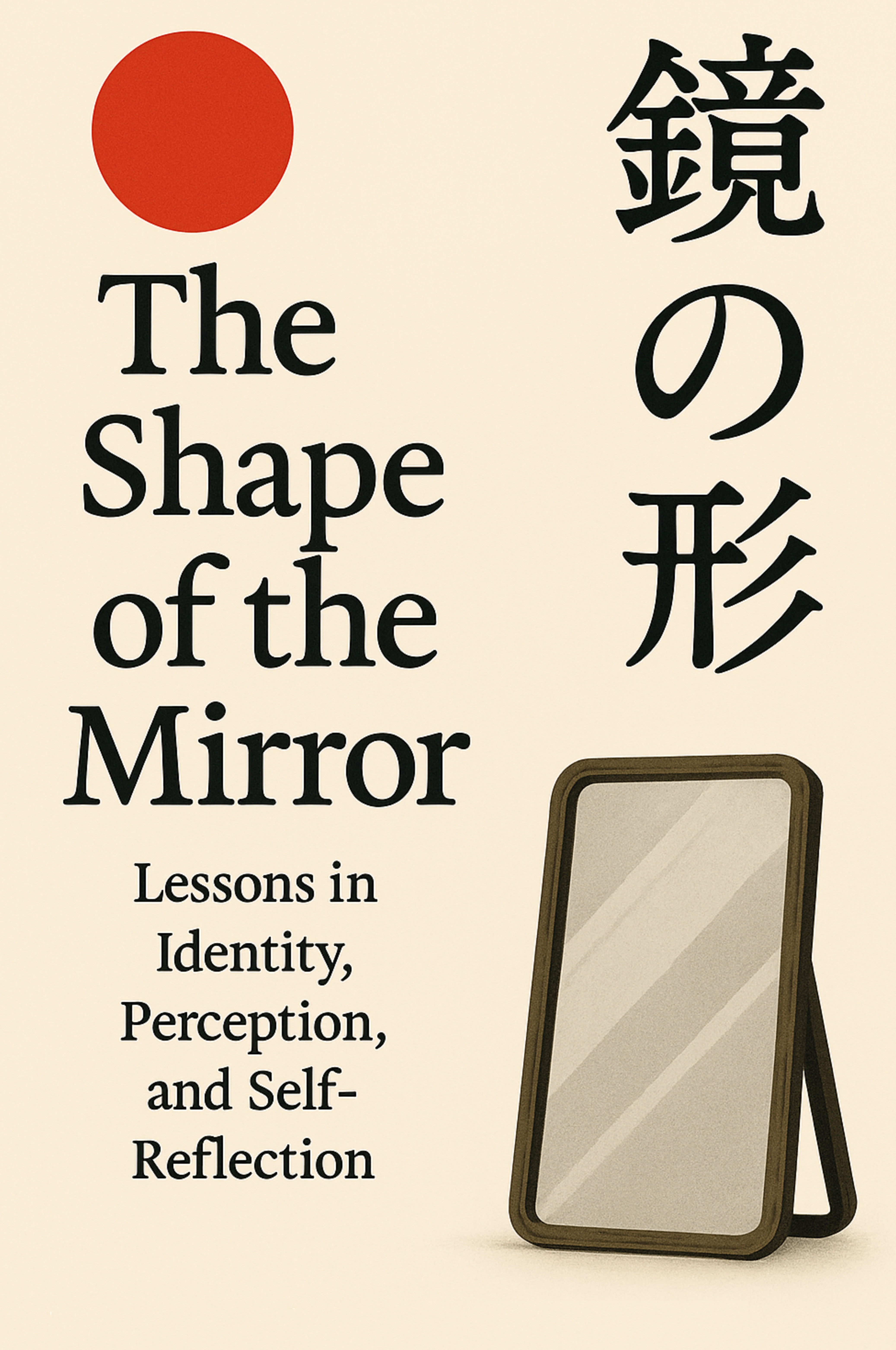
The Shape of the Mirror
These ideas are explored more deeply in the book The Shape of the Mirror, a reflection on identity, honesty, and the power of seeing ourselves more clearly.